Airport Runways
Airport runways and taxiways represent the most demanding application for asphalt pavements due to stringent safety regulations, concentrated heavy loading, and high-speed stresses. Pavements must resist fuel spillage, extreme temperatures (jet blast), and the massive wheel loads of modern aircraft without rutting or cracking.
Resistance to Permanent Deformation (Rutting)
This is the primary use of asphalt for structural layers, including the base, binder, and surface courses.
Polymer Modified Bitumen (PMB) with high stiffness and excellent elastic recovery is mandatory for the main runway and taxiway load zones.
Product :


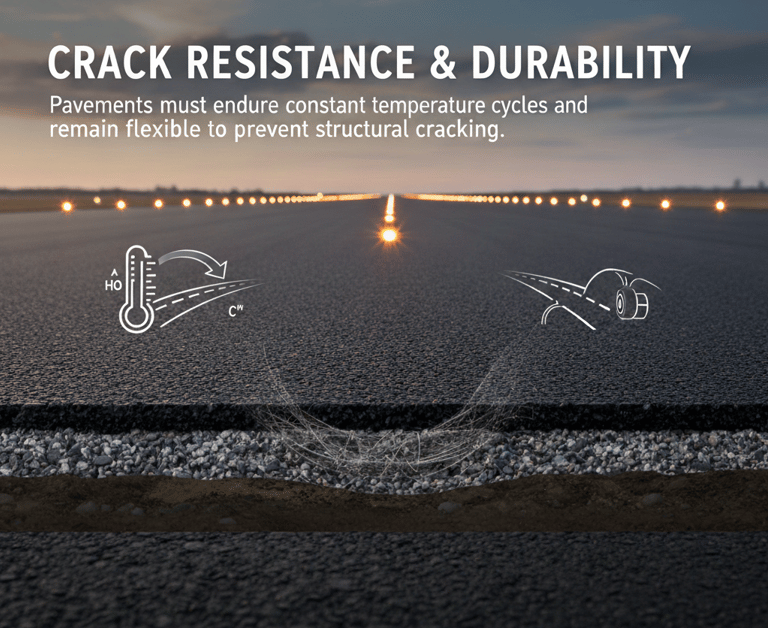
Crack Resistance and Durability
Pavements must endure constant temperature cycles and remain flexible to prevent structural cracking.
High-quality PMB provides the necessary fatigue resistance to ensure a longer service interval and minimize foreign object debris (FOD) risk.
Product :
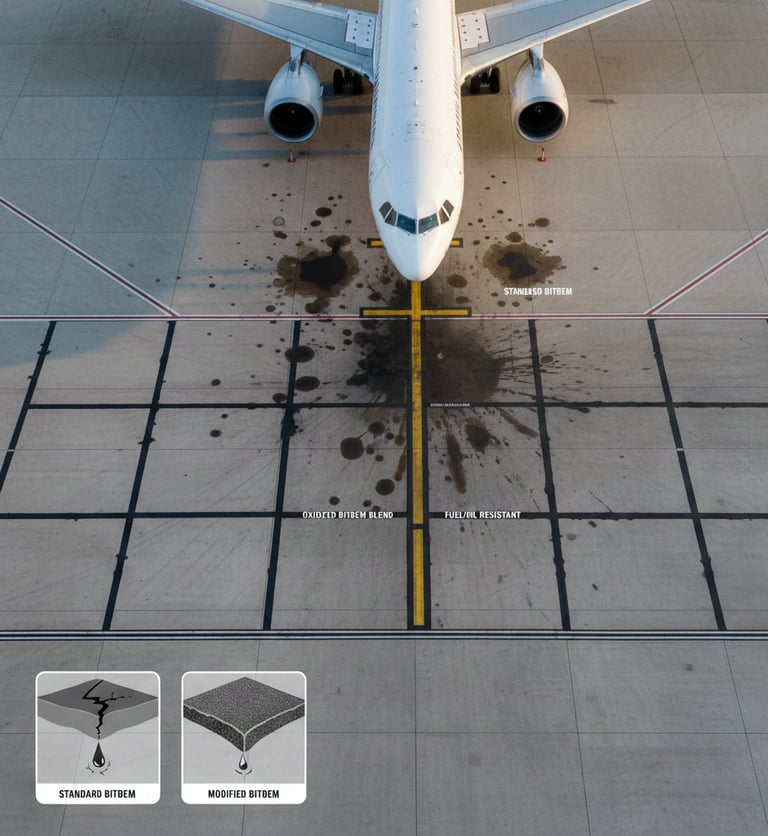
Fuel and Oil Resistance
Areas prone to spillage, such as apron stands, require specialized materials.
While standard bitumen is susceptible, specialized Oxidized Bitumen or certain modified blends can provide enhanced resistance for joint seals and surrounding pavement areas.
Product :
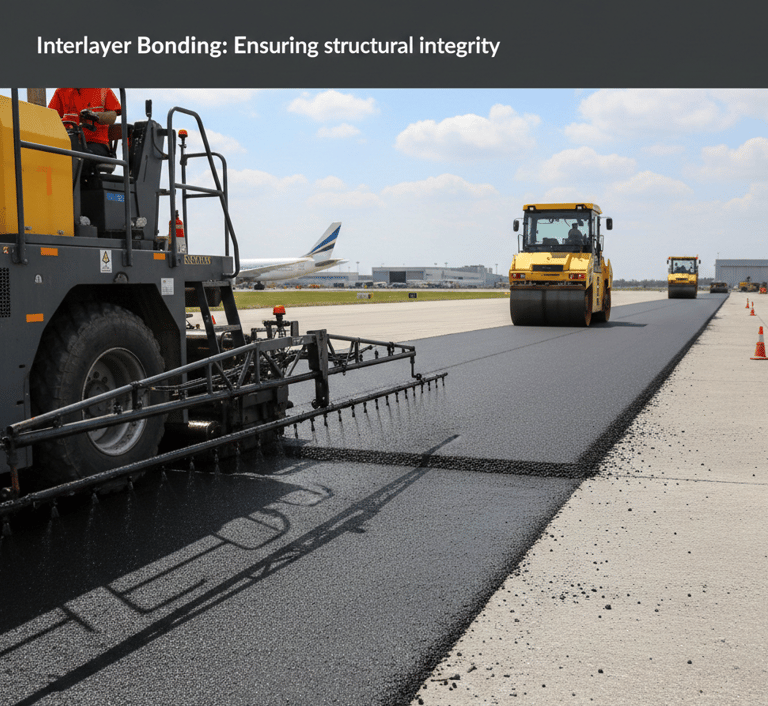
Interlayer Bonding
Ensuring the structural integrity of the pavement system is crucial for safety.
Fast-breaking Emulsion Bitumen is applied as a tack coat to fully bond the layers and prevent shearing under aircraft thrust.
Product :